Goobies 2 Builds, Mutations & Omen Synergies
Design the gene pool, stack evolving omens, and turn one goobie into a run-defining machine.
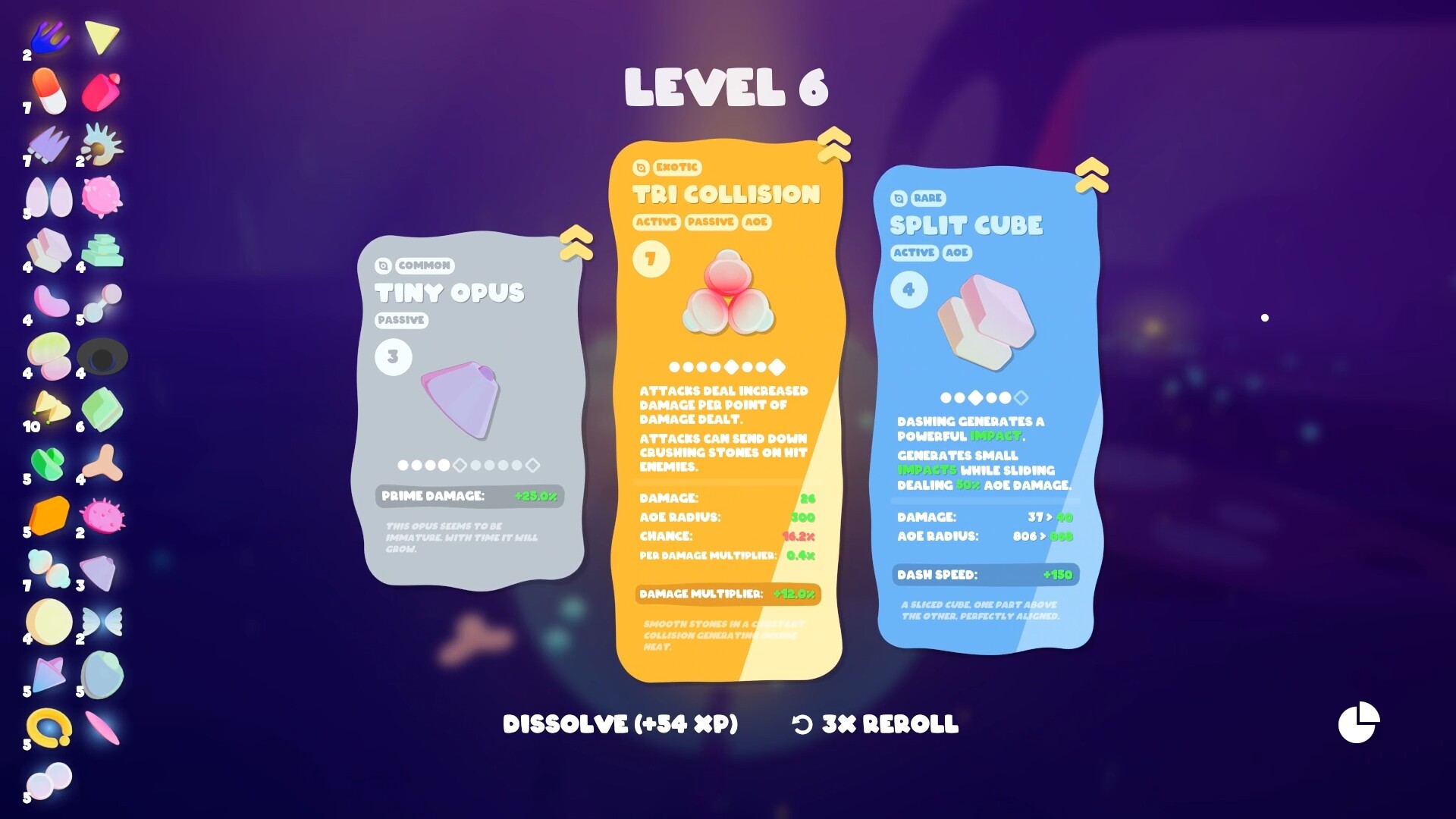
Builds in Goobies 2 are a two-layer system: genetic mutations you slot before the run, and omens you collect and stack during the run. Artifacts can rewrite the rules further, but most of your power fantasy comes from how those two layers talk to each other. This guide explains the mutation board, proven synergies, omen evolution trees, and how to avoid greedy boards that look strong on paper and die in Arctic packs.
Pair this page with the Tier List for current goobie rankings and Players for kit identities. New players should finish Getting Started first.
Mutation board fundamentals
You unlock mutations by completing challenges and progressing the account. Once unlocked, mutations live in a gene pool with limited slots. Key rules:
- Each mutation behaves differently—some add damage, some change projectiles, some grant autonomy.
- You may add multiple copies of the same mutation if space remains. Stacking Dense for raw damage is a classic example from early community runs.
- Board space is a resource. A messy mix of six unrelated genes usually underperforms a focused three-gene theme.
- Some mutations change your controls. Sentient auto-attacks nearby enemies and pushes you toward ping targeting instead of free-fire—see Controls.
Think of the board as your “class,” and omens as the random legendary drops that specialize that class mid-run.
Core mutation names to know
Exact numbers shift with patches, but these names appear constantly in successful clears:
| Mutation | Role in a build |
|---|---|
| Dense | Stackable damage; fill the board when you want burst deletes |
| Sentient | Auto-attacks nearby foes; ping to prioritize; enables hands-free DPS |
| Splintering | Projectiles splinter on impact; multiplies hit count |
| Bombastic | Explosive / rock-hurt style interactions; AoE greed |
| Proxy | Redirect or extend hit logic—pair with auto or splash kits |
| Weighted | Heavier hits / impact feel; often anti-elite |
| Furious | Aggression / tempo scaling |
| Exploding | Death or hit explosions for pack clear |
| Sucking | Pull / vacuum utility into killboxes |
| Shocked / Chain Shocker | Condition spread; feeds omen setups that punish statused blobs |
Treat the table as a vocabulary list, then build themes—not checklist spam.
Proven synergy patterns
Sentient + Splintering
Equip Sentient so your goobie fires on its own, then add Splintering so each auto-hit sprays shards. You become a moving turret: strafe, ping elites, and let shrapnel delete trash. This is one of the most discussed demo-era synergies and still a great teaching board for new co-op groups.
Dense stacks
Fill available slots with Dense when you want maximum per-hit damage. The plan is simple: delete enemies before they delete you. Weaknesses: you may lack AoE or utility, so omen picks should cover pack clear (explosions, meteors, holes) while Dense handles bosses.
Condition boards with Miniature Pyramidion
Slot Shocked, Chain Shocker, or other condition genes, then prioritize omens like Miniature Pyramidion that evolve into stronger effects as stacks rise against statused targets. This is a “setup then payoff” fantasy—slower early, terrifying once the omen tree matures.
Bombastic / Exploding pack melt
Lean into Bombastic, Exploding, and pull tools like Sucking so packs collapse into themselves. Pair with goobies that already splash (Bingus slam) for overlapping AoE.
Hybrid: Dense core + one utility gene
Many veterans keep two or three Dense copies, then spend the last slots on Sentient, Splintering, or a condition gene once they learn the zone. Incremental swaps beat full redesigns every run.
Omen stacking and evolution trees
Omens are mid-run collectibles—40+ varieties—that gain new properties as quantity grows. Stacking three of the same omen is often more valuable than owning three unrelated singles.
Named examples from store and creator coverage:
- Echoing Hole — spatial / void-style pressure that rewards repeated stacks.
- Prickly Meteorite — overhead threat and area denial as it evolves.
- Miniature Pyramidion — condition and structure synergy favorite.
- Tiny Opus — scaling curiosity that changes identity at higher counts.
- Homing Goo — tracking help for mobile targets and chaotic co-op screens.
Decision rule: when offered a new omen versus a stack of your core omen, prefer the stack unless the new omen fills a hole your mutations cannot (e.g., mobility, revive utility, or boss execute).
Statues and alternate pickups can force hard choices—sometimes you sacrifice a poison-style omen for double jump mobility. Mobility saves runs; greed omens end them. Record which trade won for your goobie and reuse it.
Goobie kits and board matching
- Wiggle Woogle — sniper-like multi-orbs and healing orb drops. Loves Dense, crit-adjacent omens, and clean sightlines. Sentient turns him into an autofire turret.
- Bingus Bongus — tank HP, high jump, ground slam scaling with velocity. Loves Exploding / Bombastic / Weighted boards that reward slamming into clumps.
- Dizzy Wizzy, Hoozey Woozey, Spinky Winky / Spinky — returning originals with distinct evolution trees; match boards to whether their kit is projectile, DoT, or mobility first.
- Newer names you will meet across the ten-goobie roster and community chatter include Rolley, Spinny, Bean, Urchin, Pearl, Starry, Silly Willy, Moon Canoon, and Blazing—always verify unlock conditions in-game and on Players.
Evolution trees on the goobie itself multiply whatever the board started. A slam goobie with Exploding mutations and meteor omens snowballs differently than a sniper with Homing Goo and Dense.
Artifacts and difficulty as build modifiers
36 artifacts alter Blobverse rules. Enable them only after you understand baseline mutation + omen play. Likewise, raising difficulty or unlocking Impossible (after beating ancient Haibel) changes how much defensive omen utility you need. A Dense-only board that stomps Normal may need Sentient coverage or mobility omens on Impossible.
Co-op build drafting
In a three-player lobby, do not triple-stack identical Dense snipers unless you enjoy wipes. Draft roles:
- One tanky slam or frontliner
- One single-target / boss melt
- One pack-clear or condition support
Share omen priorities in voice chat: if two players chase the same omen tree, you dilute stacks. More detail in Co-op.
Practice plan
- Clear once with all Dense to feel raw damage.
- Clear once with Sentient + Splintering to feel autopilot shrapnel.
- Clear once with a condition + Pyramidion focus.
- Compare clear times and wipe causes, then read Bosses if telegraphs—not DPS—were the problem.
Related links
- Getting Started — board unlocks and first-run advice
- Controls — ping targeting for Sentient
- Bosses — when to favor boss-melt vs pack-melt boards
- Tier List — meta snapshot
- Guides Hub — all tutorials
Build with intent, stack with patience, and let omens evolve—your goobie will do the rest.
Frequently Asked Questions
Quick answers for Blobverse runs.
Can I put multiple Dense mutations on one board?
Yes. As long as the gene pool has free slots, you can stack multiple copies of the same mutation. Dense stacks are a popular damage-focused opener.
What does Sentient change about gameplay?
Sentient makes your goobie auto-attack nearby enemies and emphasizes ping targeting instead of constant free-aim. It pairs extremely well with Splintering.
Should I always pick a new omen over stacking an old one?
Usually no. Omens evolve with quantity—stacking your core omen often unlocks stronger properties than collecting three unrelated singles.
How do artifacts interact with builds?
Artifacts rewrite run rules on top of mutations and omens. Learn baseline boards first, then enable artifacts once you understand how they amplify or punish your theme.
Where do I see which goobie fits a build?
Use the Players hub for kit roles and the Tier List for current strength. Match slam goobies to AoE boards and sniper goobies to Dense or Sentient plans.